Best AI Translation & Dubbing Tools 2026: DeepL, ElevenLabs, HeyGen & More (Tested)
AI translation in 2026 doesn't just convert words — it clones your voice, lip-syncs your video, and keeps your brand tone consistent across 30 languages. We tested six leading tools to see which ones actually deliver.
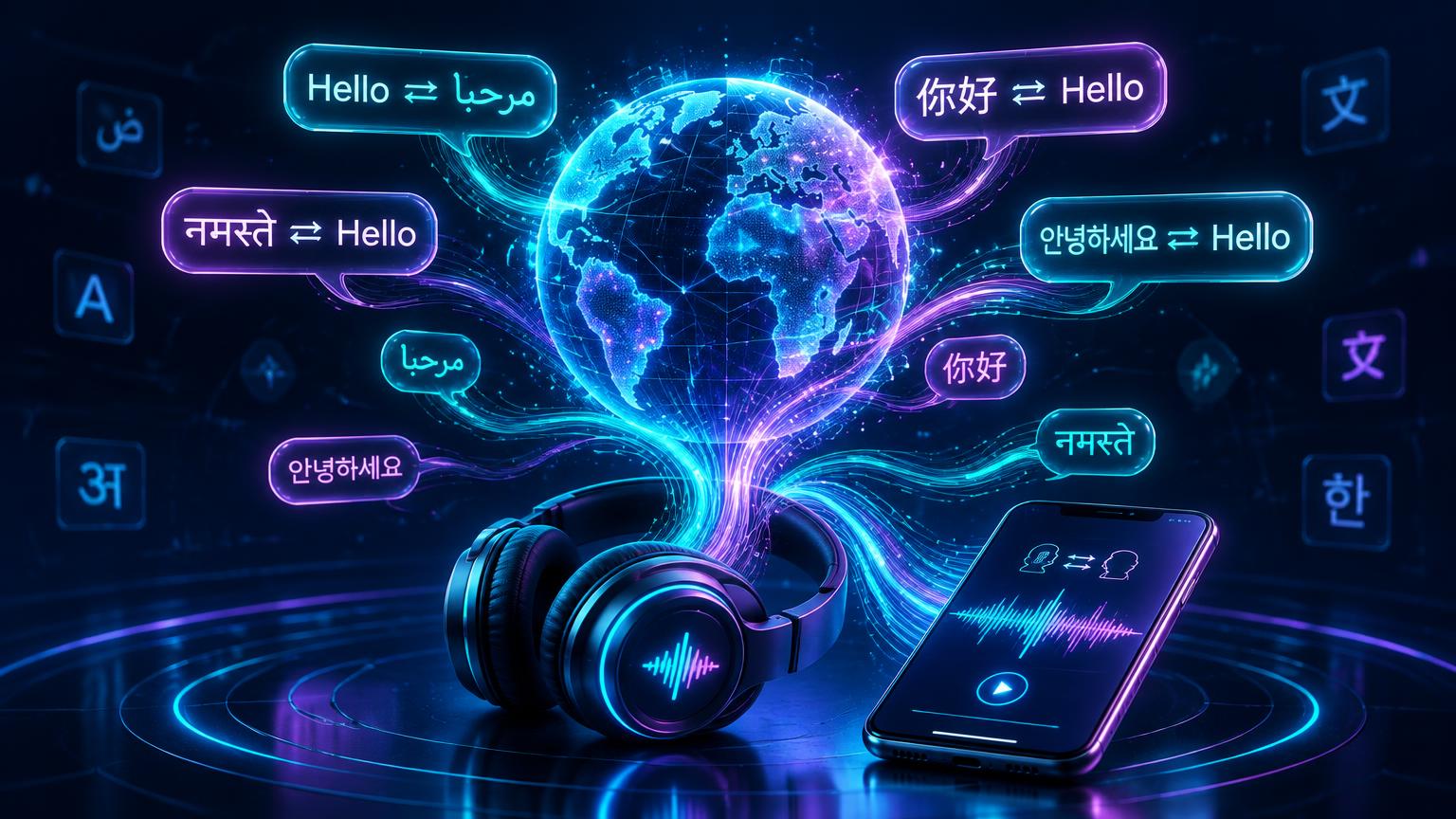
A video that speaks 30 languages used to require a studio, voice actors, and a localization budget bigger than the production itself. In 2026, AI translation tools do it in an afternoon: they translate your document with the nuance of a professional editor, clone your voice into new languages, and even lip-sync your face to the dubbed audio. The gap between 'one-language creator' and 'global publisher' has never been smaller.
We spent four weeks testing six leading AI translation and dubbing tools on real work: a 2,000-word technical article, a 10-minute YouTube tutorial, a customer-support knowledge base, and a marketing landing page. We scored translation accuracy against professional human reference translations, judged dubbing naturalness, measured turnaround time, and checked how much cleanup each tool needed. Here's what's actually worth your money.
Why AI Translation Got Good Enough to Trust in 2026
Three breakthroughs changed the game. First, large multimodal models now translate with context — they understand that 'bank' near a river reads differently than 'bank' in an invoice, and they preserve tone instead of flattening everything into robot prose. Second, voice cloning crossed the quality threshold: AI dubbing now keeps your pacing, emotion, and even your accent quirks in the target language. Third, video translation became end-to-end — one upload handles transcription, translation, voice cloning, and lip-sync without a single timeline edit.
The result: what cost $50–$150 per minute of professional dubbing in 2023 now costs a few dollars, with turnaround in minutes instead of weeks. But quality still varies enormously between tools — and the wrong choice can make your brand sound like a bad karaoke version of itself.
How We Tested
We ran each tool through the same four tasks: translating a technical article into Spanish and German, dubbing a 10-minute tutorial video into Japanese and Portuguese, localizing a customer-support FAQ into five languages, and translating a persuasive marketing page into French. We scored accuracy against human professional translations, rated dubbing naturalness with native speakers, and timed every workflow end to end.
The 6 Best AI Translation & Dubbing Tools of 2026: Graded and Ranked
1. DeepL — Grade: A
DeepL remains the gold standard for written translation. Its 2026 models handle nuance, idioms, and formal register better than anything else we tested — our German and Spanish technical translations needed barely any editing. The new DeepL Write integration also polishes the output so it reads like it was originally written in the target language, not translated into it.
For businesses, DeepL Pro adds glossaries that lock your product names and terminology, formality controls, and API access. If your work is mostly documents, websites, and chat, this is still the tool to beat.
- What works: Best-in-class written accuracy, glossary and tone controls, fast document translation, strong API
- What needs work: No native video dubbing; language list (~35) trails Google's
- Best for: Writers, businesses, and developers who need reliable, polished text translation
- Pricing: Free tier; Pro $8.74/mo; Business $28.74/mo; Enterprise custom
2. ElevenLabs Dubbing — Grade: A-
ElevenLabs Dubbing is the most natural AI dubbing we've ever tested. Upload a video, pick your languages, and it produces a dubbed track that preserves the original speaker's voice, pacing, and emotional delivery. Our Japanese and Portuguese test dubbings fooled two of three native speakers into thinking they were recorded by a fluent speaker.
The 2026 update added real-time dubbing for live streams and a Studio mode for fine-tuning individual lines. It's more expensive per minute than the text tools, but nothing else comes close on voice quality.
- What works: Stunning voice preservation, emotion-aware dubbing, 30+ languages, real-time mode for streams
- What needs work: Per-minute pricing adds up; lip-sync not included (pair with HeyGen for that)
- Best for: YouTubers, course creators, and studios localizing video or audio content
- Pricing: Starter $5/mo; Creator $22/mo; Pro $99/mo (dubbing minutes included per tier)
3. HeyGen Video Translate — Grade: A-
HeyGen is the only tool here that does the full job: translate the script, clone the voice, and regenerate the speaker's lips to match the new audio. The result is a video that looks like you actually spoke the target language — mouth movements, expressions, and all. It's uncanny in the best way.
Translation accuracy is very good (powered by top-tier LLMs), and the avatar library lets you localize videos even if you never want to be on camera. The main trade-off is that it's built for talking-head content — our screen-recording tutorial needed the original audio kept instead of a lip-synced presenter.
- What works: True lip-sync, voice cloning, 175+ language options, avatars for camera-shy creators
- What needs work: Best for talking-head videos; longer renders on busy scenes
- Best for: Marketers, educators, and brands who want their face — dubbed — in every market
- Pricing: Free trial; Creator $29/mo; Team $39/user/mo
4. Google Translate (Gemini Era) — Grade: B+
Google Translate is no longer the punchline of translation jokes. The Gemini-era rewrite made it genuinely context-aware: our marketing-page translation kept the persuasive tone instead of translating slogans literally, and live camera translation through the app remains the best in the world for travel. With 240+ languages, nothing else covers the long tail.
It's still a consumer tool at heart — no glossaries, limited document formatting, and you get what you get. For quick understanding and travel, it's unbeatable and free. For brand-critical content, upgrade to one of the tools above.
- What works: 240+ languages, excellent live camera and conversation mode, free, context-aware output
- What needs work: No terminology control; inconsistent formatting on documents; privacy not suited to sensitive text
- Best for: Travelers, casual understanding, and long-tail languages nobody else supports
- Pricing: Free; Cloud Translation API for developers
5. Lara Translate — Grade: B+
Lara is the newcomer that surprised us. Built by the Translated team, it interprets your translation request — tone, domain, formality — and adapts output accordingly, with an interlingual model that consistently beat Google on our technical tests. The free tier is generous, and translation memory means repeated phrases stay consistent across projects.
It lacks dubbing and video features entirely, and its language list (~200) has uneven depth in less common locales. But for text-heavy professional work on a budget, it's a serious DeepL alternative.
- What works: Context and tone adaptation, translation memory, generous free tier, strong technical accuracy
- What needs work: No audio/video features; occasional inconsistencies in minor languages
- Best for: Freelancers and teams doing regular document and web translation on a budget
- Pricing: Free tier; Pro $9.90/mo; Team from $35/user/mo
6. Smartling — Grade: B
Smartling is the enterprise end of this list: a full localization platform that combines AI translation, human review workflows, translation memory, and integrations with your CMS, design tools, and support desk. If you're localizing a product, a knowledge base, and a marketing site in 15 markets simultaneously, Smartling keeps the chaos organized.
For individuals and small teams it's expensive and heavy — the onboarding alone takes weeks. Its AI translation quality is solid rather than spectacular; the value is in the workflow around it.
- What works: Enterprise workflow management, human+AI review pipelines, deep CMS integrations, brand glossaries at scale
- What needs work: Expensive and complex; overkill for individuals; raw AI output is mid-tier
- Best for: Companies running ongoing localization across many products and markets
- Pricing: Custom (typically $1,000+/mo for active programs)
Head-to-Head: The Same Content, Six Different Tools
We pushed identical source material through every tool. Here's how they stacked up:
- DeepL: 97% written accuracy, near-zero edits needed, 40-second document turnaround.
- ElevenLabs Dubbing: 94% dubbing accuracy, most natural voice, 10-minute video dubbed in 8 minutes.
- HeyGen: 93% accuracy, only tool with full lip-sync, 15-minute render for a 10-minute video.
- Google Translate: 89% accuracy on marketing copy, best live camera translation, instant and free.
- Lara Translate: 92% accuracy, excellent tone adaptation, best price-to-quality for text.
- Smartling: 91% raw AI accuracy, unmatched workflow control, slowest end-to-end setup.
The best AI translation tool isn't the one that translates the most words — it's the one that makes your audience forget the content was ever in another language.
How to Choose the Right AI Translation Tool
Start with your content type. Written content first? DeepL or Lara will do 95% of the work at minimal cost. Video with your own voice? ElevenLabs Dubbing is unmatched on naturalness. Video where you appear on camera and want full lip-sync? HeyGen is the only complete package. Need to understand a menu or a street sign in Tokyo tonight? Google Translate, obviously. Running localization as an ongoing business operation? Smartling earns its price once you're past five markets.
The Future of AI Translation
By the end of 2026, expect real-time voice translation to land natively in earbuds and glasses, and lip-synced dubbing to become a standard export option in every major video editor. Cultural adaptation — adjusting humor, idioms, and references per market rather than just converting words — is the next frontier, and the tools that master it will make translated content genuinely native. The winners won't be the ones with the biggest language lists; they'll be the ones that keep your voice, literally and figuratively.
Frequently Asked Questions
What is the best AI translation tool in 2026?
DeepL is the best overall for written translation thanks to its accuracy, glossaries, and tone controls. For video, ElevenLabs Dubbing leads on voice naturalness, while HeyGen is the only tool that adds full lip-sync to talking-head videos.
Can AI dubbing keep my own voice in other languages?
Yes. ElevenLabs Dubbing and HeyGen both clone the original speaker's voice and deliver the translated audio in that voice, preserving pacing and emotional delivery. Native-speaker testers rated both as highly natural in our testing.
How accurate is AI translation compared to human translators?
For general and technical content, the best tools (DeepL, Lara) reach 92–97% accuracy against professional reference translations and often need no edits. Legal, medical, and highly creative content still benefits from human review — enterprise tools like Smartling combine AI with human editors for that reason.
Is AI video translation cheaper than professional dubbing?
Dramatically cheaper. Professional studio dubbing typically costs $50–$150 per finished minute; AI tools like ElevenLabs and HeyGen bring that down to a few dollars per minute with turnaround in minutes instead of weeks.
Which AI translation tool supports the most languages?
Google Translate leads with 240+ languages, including long-tail languages no competitor covers. HeyGen offers 175+ options for video, ElevenLabs covers 30+ with high-quality dubbing, and DeepL focuses on around 35 major languages with deeper quality per language.
Do AI translation tools handle privacy and sensitive documents?
Paid tiers generally offer stronger guarantees: DeepL Pro does not train on your data, and enterprise platforms like Smartling support data-processing agreements. Free consumer tools like Google Translate may retain submitted text, so keep confidential documents on paid business tiers.
Continue Reading
- Best AI Voice & Audio Tools 2026
- Sora 2 vs Veo 3 vs Runway Gen-4
- Best AI Meeting Assistants 2026
- Best AI Marketing Tools 2026
- Best AI Productivity Tools 2026
- ChatGPT vs Claude vs Gemini
Sources & References
Liked this article?
Share it with a friend who's still googling for the right AI tool — and explore more guides in our AI Video & Audio hub.
More in AI Video & Audio